Henrik Fries, former R&D Manager at Polestar, is now leading product development at ChargeNode. Read about his vision for smart charging technology and the future of electric car charging.
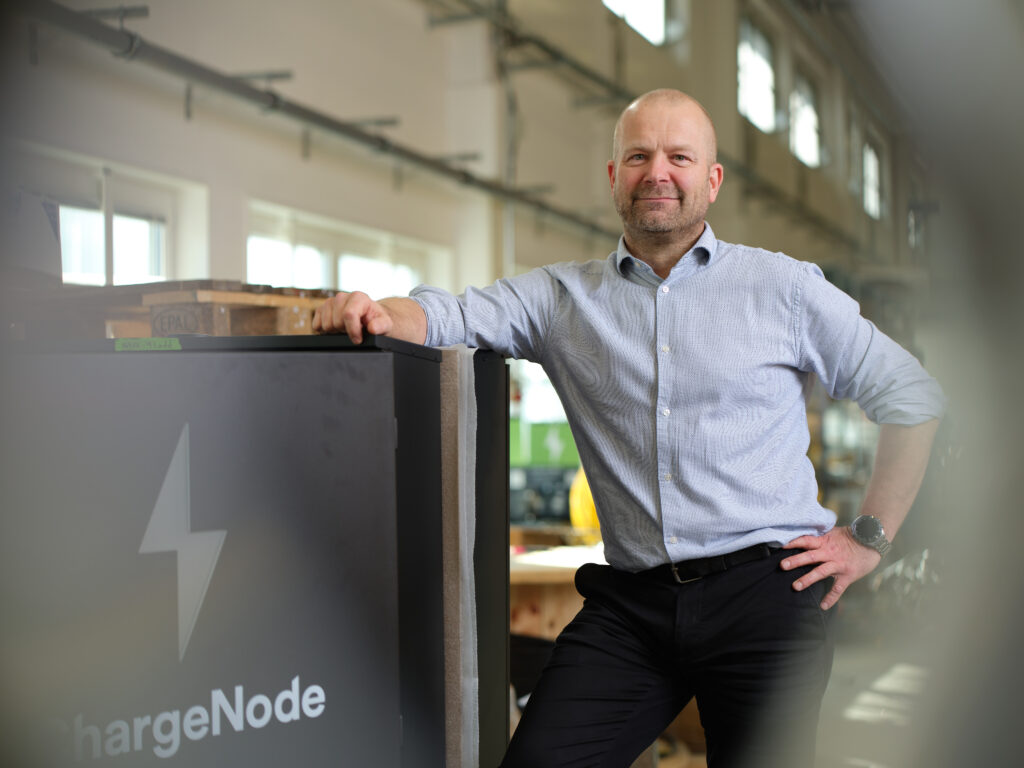
With extensive experience at Polestar, Henrik Fries is now in charge of Senior Director Product Development at ChargeNode. We took the pulse of him to get an insight into his exciting role.
Henrik Fries joined ChargeNode 3 years ago. He is an electrical engineer from Chalmers, specialising in Business Administration and Entrepreneurship. After graduation, he worked in business and product development within various companies, most often as an owner. In recent years, he has been involved in developing Polestar from a pure racing company to offering everything from engine optimisations to Polestar Editions on various Volvo models. When the company was sold to Volvo in 2015, he continued as head of R&D and laid the foundations for Polestar 1 & 2. In other words, the match with ChargeNode's vision is 100%.
ChargeNode's journey began in the understanding of two things: First, there must be opportunities to charge everywhere in the future. Secondly, the power will be limited, so it is necessary to distribute the effect in an intelligent way. Our customers usually have access to 63-100A parking lot and we are unique in being able to get by on such low current. With centralized energy and charge control, we can ensure that all parking spaces in a facility get the right power at the right time.
All control and intelligence sits centrally and distributes power to the right outlets. There can be up to 54 outlets connected to the same charging center. This way we can make more industrial component selections and easily upgrade and replace parts that wear out. In addition, the socket installation itself does not take up more space than just one outlet. This means that the charging sockets can be integrated neatly into the urban environment, for example in our beams and lighting bollards.
In the near future, charging outlets will be as natural as ordinary wall outlets. But there will not be unlimited power and then you have to distribute available power in a smarter way, both at the local level and in the community. In the coming years, there will be an extreme amount in terms of hardware, software and services. Which actors survive and do what in the food chain is not obvious. Authorities, energy companies and the automotive industry are also important players in creating the right conditions when it comes to charging. I believe we are an important part of this transition from fossil to sustainable. We are relatively young and fast-footed and that will be required in the next few years.
Our philosophy is to always charge each car as fast as it runs and not “smear” out the available power. The advantage will be that we can prioritize the charges when the user wants it to be finished and how much charge they want. And that only works with a centralized control of all ongoing charges. Our intelligence is centrally located and controls all outlets and charges. In this way, we can prioritize and distribute ongoing charges in lightning speed and without the risk of poor communication between different charging boxes.
In our next generation of charging systems, which we have just rolled out, we have improved the old architecture mainly in terms of adapting for volume production, logistics and installation. The Gen4 system is smaller and lighter, but still has the same capacity of up to 66kW of simultaneous charging. One of the novelties is that we can connect anything from 9 to 54 charging points to the same charging center. We continue to load the optimal number of cars, usually two to nine vehicles depending on the available power at the service. Also in the pipeline is our first in-house product in DC charging and a more modular charging hardware that will more than halve the installation time.
My cars are both a passion, a racing hobby and a job. Long before the Polestar, I experimented with an electric-converted Smart. Now I have a 2-seater Renault Twizzy, which is one of the first electric cars. It's a bit of a rolling laboratory for both electric motor trimming and DC charging. I have of course sharpened the software and doubled the power, now I am also waiting for a battery and engine replacement. For longer rides, however, I use my Polestar 2 Performance.

ChargeNode operates the charging service behind Nästa Energy Lab — one of Europe's largest V2G projects, launched today in Torslanda. With 160 charging points and a proprietary charging platform, ChargeNode enables a system where vehicles, buildings and batteries interact in real time. A partnership with Buddy Energy and Volvo Cars sets a new standard for large-scale V2G integration.
.webp)
The government's proposal for individual charging rights risks creating technical chaos in Sweden's BRFs. ChargeNode explains why collective end-to-end solutions are essential for safe, equitable and sustainable electrification.
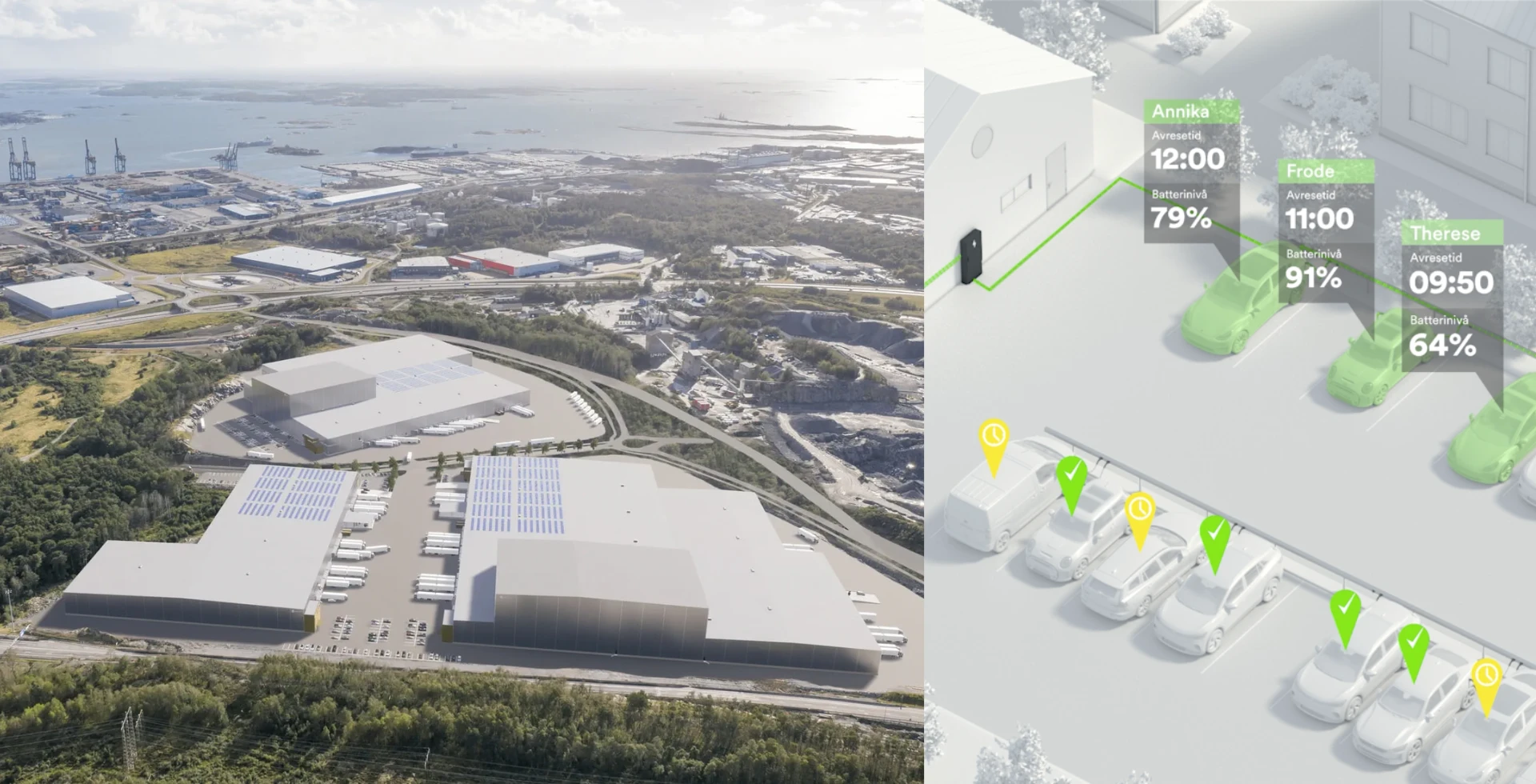
Buddy Energy and ChargeNode create an integrated energy solution in Halvorseng Logistics Park. Solar power, energy storage and smart charging make electrified logistics sustainable and profitable.
Charge Node Europe AB
Neongatan 4B
431 53 Molndal