ChargeNode establishes itself in Norway with Frode Braaten as Sales & Country Manager. Read about his vision for scalable electric car charging and the solutions of the future in the Norwegian market.

We warmly welcome Frode Braaten as Sales & Country Manager for Norway!
With an education as an electrician and electrical engineer and a full professional career in the electrical industry, the last ten years with solutions and products for electric car charging and charging infrastructure, he is cut and cut for our venture in Norway.
----When I started in the industry, there were not so many electric cars, but when the authorities set targets for electrification of the Norwegian private car fleet by 2025, my interest grew. I have had the pleasure of following that journey, but it has been commercially challenging to come up with good solutions at the same rate as market, technology and standards have evolved. To find the best solutions for the domestic market, I have worked with many European manufacturers of both AC and DC solutions. It was here that ChargeNode emerged with an exciting mindset of how to meet charging needs based on an energy-efficient, scalable and sustainable model and a series of advantages: The ability to make smart use of available energy to charge as many electric cars as possible. Possibility of many charging outlets without everyone needing a charging box. Material and aesthetic expression that last longer than other solutions. Low cost of operation and ownership that guarantees a scalable plant in the long term. Since ChargeNode develops its own software and hardware, we can ensure function and operation for users. In addition, we have innovative founders and a fantastic team in Sweden who put their heart and soul into the development. When I got the chance, it felt natural to come along for the ride.
What is the difference between the Swedish and Norwegian markets?
There are both similarities and major differences between the Norwegian and Swedish markets. The biggest difference is probably the overall electric car market and new car sales. The market is more mature in Norway and a natural choice when to buy a new car. If we combine electric cars and rechargeable hybrids, we are talking about 22% of the total fleet in Norway and 6% in Sweden. This means that we have to solve the need for charging, at home, at work and after the roads and it is not entirely simple. I think the need in the Swedish and Norwegian markets is about the same, Norway is only a few years ahead in the electrification of the private car fleet. Among other things, thanks to a good incentive program related to the purchase, use of electric cars and the establishment of an infrastructure for charging.
What challenges do you see in the industry?
The industry is still fairly new and we probably don't see all the challenges. Although we will see a great development of energy-efficient batteries, there will still be a huge need for recharging. To avoid bottlenecks, we need to recharge when we can, not when we have to. And with more and more electric cars, there must be more charging outlets. I also see a major challenge in equalising energy consumption over a longer period of the day, which will help us optimise the existing infrastructure. To meet these challenges, manufacturers and suppliers need to innovate.
Norway has the most electric cars per capita in the world, have you noted any challenges around that?
Norway has become a kind of test market for anyone who has a solution for electric car use. Not everything is equally good or sustainable. Although Norway has a high density of electric cars, Norway is a small future market with many challenges. We do not know how well the solutions developed in the world work in Norway. We also see that we have challenges related to electric car density in urban areas, where today's technology is not able to meet the demand for electric car charging.
How big is the need for scalable electric car charging in Norway?
Today we have many 1st and 2nd generation solutions that no longer cover the need and as our fleet has an average age of over 10 years, the number of electric cars will continue to grow exponentially. I would argue that scalable electric car charging will be a key factor for the future. The need is great.
What are your expectations when ChargeNode is launched on the Norwegian market?
I look forward to telling the Norwegian market how ChargeNode's scalable charging technology can solve many challenges and enable more people to charge. I expect us to grow and become a significant player, just like in Sweden.
What's the best thing about ChargeNode's charging technology?
Of course, we have a charging center, centrally located where all the expensive and operational components sit, while charging type 2 is simply exhibited at the parking lot. Other advantages include our simple APP and charging portal that prioritizes the power in the system dynamically between 3 and 22kW to dedicated charging nodes prioritized according to departure needs, our easy payment methods and a good service promise.
What will be the next step for the Norwegian market?
It is important that we can quickly establish ourselves in Norway and come out and talk about our charging technology. We need to establish offices with more salespeople and get good cooperation in the market. We want to be an operator with an active presence for our customers and partners in Norway.

ChargeNode operates the charging service behind Nästa Energy Lab — one of Europe's largest V2G projects, launched today in Torslanda. With 160 charging points and a proprietary charging platform, ChargeNode enables a system where vehicles, buildings and batteries interact in real time. A partnership with Buddy Energy and Volvo Cars sets a new standard for large-scale V2G integration.
.webp)
The government's proposal for individual charging rights risks creating technical chaos in Sweden's BRFs. ChargeNode explains why collective end-to-end solutions are essential for safe, equitable and sustainable electrification.
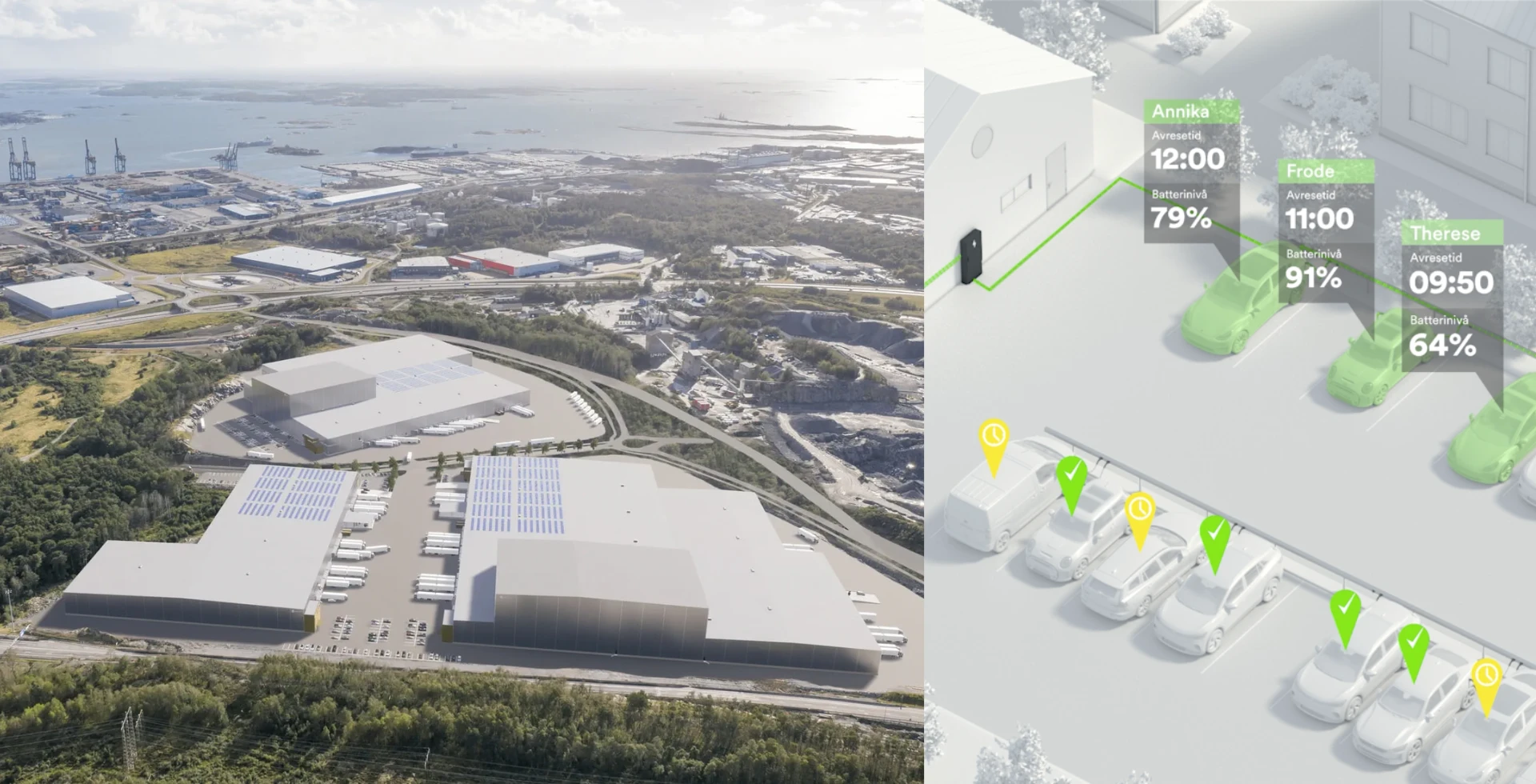
Buddy Energy and ChargeNode create an integrated energy solution in Halvorseng Logistics Park. Solar power, energy storage and smart charging make electrified logistics sustainable and profitable.
Charge Node Europe AB
Neongatan 4B
431 53 Molndal