Power tariffs to be introduced in 2027 — learn how smart electric car charging can lower costs and smooth power peaks for properties and BRFs.


Sweden is facing a major shift in the way we use and pay for electricity. Med power tariffs being introduced broadly from 2027, equalising electricity use will be more important than ever — especially for property owners and those installing electric car charging. But what do power tariffs really mean, and how can smart charging become an economic benefit instead of a cost shock?
Traditionally, the electricity bill has been about how many kilowatt-hours (kWh) you use -- that is, the amount of energy. But now the focus is shifted to power (kW), that is, how fast and when you use the electricity. Imagine a water tank (energy) and a water hose (power): Sweden has plenty of energy, but bottlenecks in local area networks mean that capacity -- the “hose” itself -- is limited, especially in growing cities.
From 2027, all Swedish electricity grid companies will have to charge for power. Pricing varies: some charge for the maximum hour per month, others have time-controlled fees or subscription increments for capacity. In common, the energy component becomes less important — it is the utilization of grid capacity at the right time and place that determines the cost.
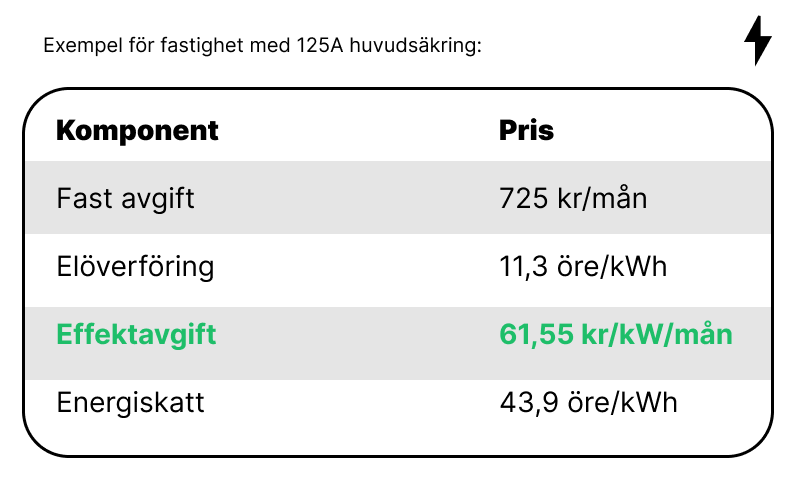
A property with 125A main fuse can receive a power charge of 61.55 kr/kW per month, and the fee is higher during weekdays 07—20 (Nov—March). At the same time, you get paid to shift consumption from high load to low load — a strong incentive for smart charging.
Electric car charging is unique: cars are parked much longer than they need to be charged. In a BRF the car is parked for an average of 14 hours, but only needs 2 hours charging. It provides 12 hours of flexibility! Charging can be controlled at times when the electricity price and power charge are at their lowest, and the power can spread out over time — cheaper than batteries and grid augmentation.
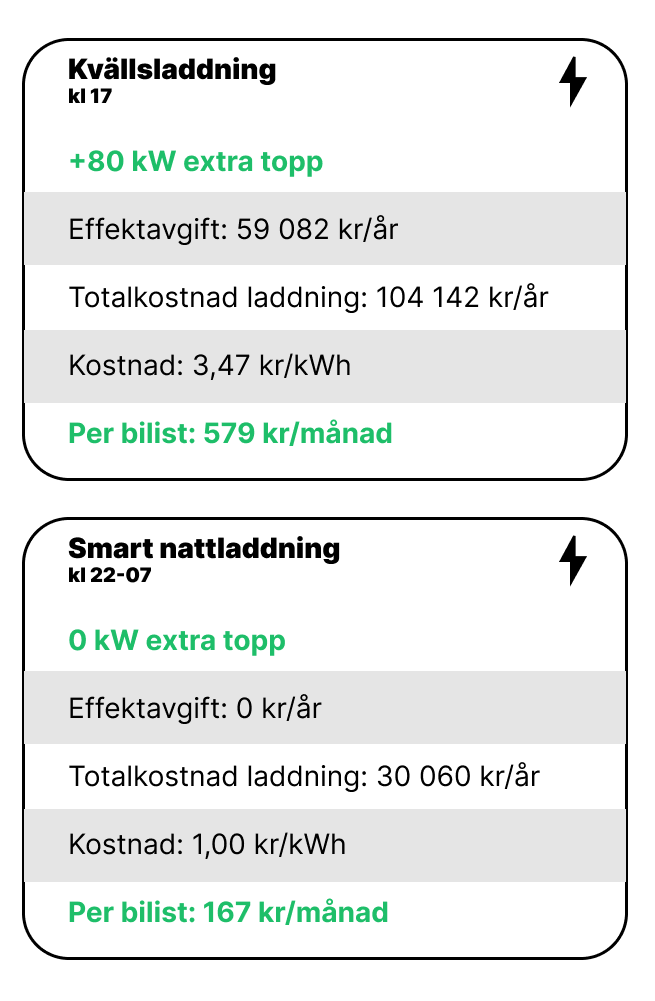
A BRF with 30 apartments and 15 electric cars can save over SEK 74,000 per year by shifting the charge from evening to night. The cost per electric motorist drops from 579 SEK/month to 167 SEK/month. It's about avoiding power peaks and taking advantage of lower electricity prices at night.
ChargeNode has developed technology in which the electric motorist states departure time and charging requirements in the app, and the charging is automatically optimized. The result is consistent overnight loads and dramatically reduced costs — both for electricity and power.
The technology exists, but the behavior has to change. Electric motorists expect charging instantly, and few property owners understand power tariffs. Charging systems need to be as obvious as WiFi — smart and automatic, without the user having to think about it.
Full electrification of the car fleet increases electricity demand by about 8%, but the problem is not the energy -- it's the power peaks locally. With smart governance and the right pricing, electrification can become an opportunity, not a problem.
We are moving towards an energy system where energy is sometimes cheap or free, but power is expensive. Smart control becomes more important than hardware, and charging becomes real estate's most important flexibility resource. Those who act now and implement smart charging will see big savings — those who wait risk increased costs.
Want to know more about how smart charging can help your property? Contact ChargeNode “We already have over 70,000 charging points in operation and see the savings every day with our customers. Now it's your turn to join the journey towards a sustainable electricity system!
Charge Node Europe AB
Neongatan 4B
431 53 Molndal